Applying for a job used to take an evening. You would read the advertisement, adjust your CV and wrestle with a cover letter that sounded interested without sounding desperate. Then you would do it all again for the next role.
Now you can paste the job description into ChatGPT, upload your CV and have a respectable first draft before your coffee gets cold.
There is a lot to like about that. Being good at your job does not necessarily make you good at writing about it. AI can help candidates explain their experience, particularly when they are applying in a second language or have never been taught how to write an application.
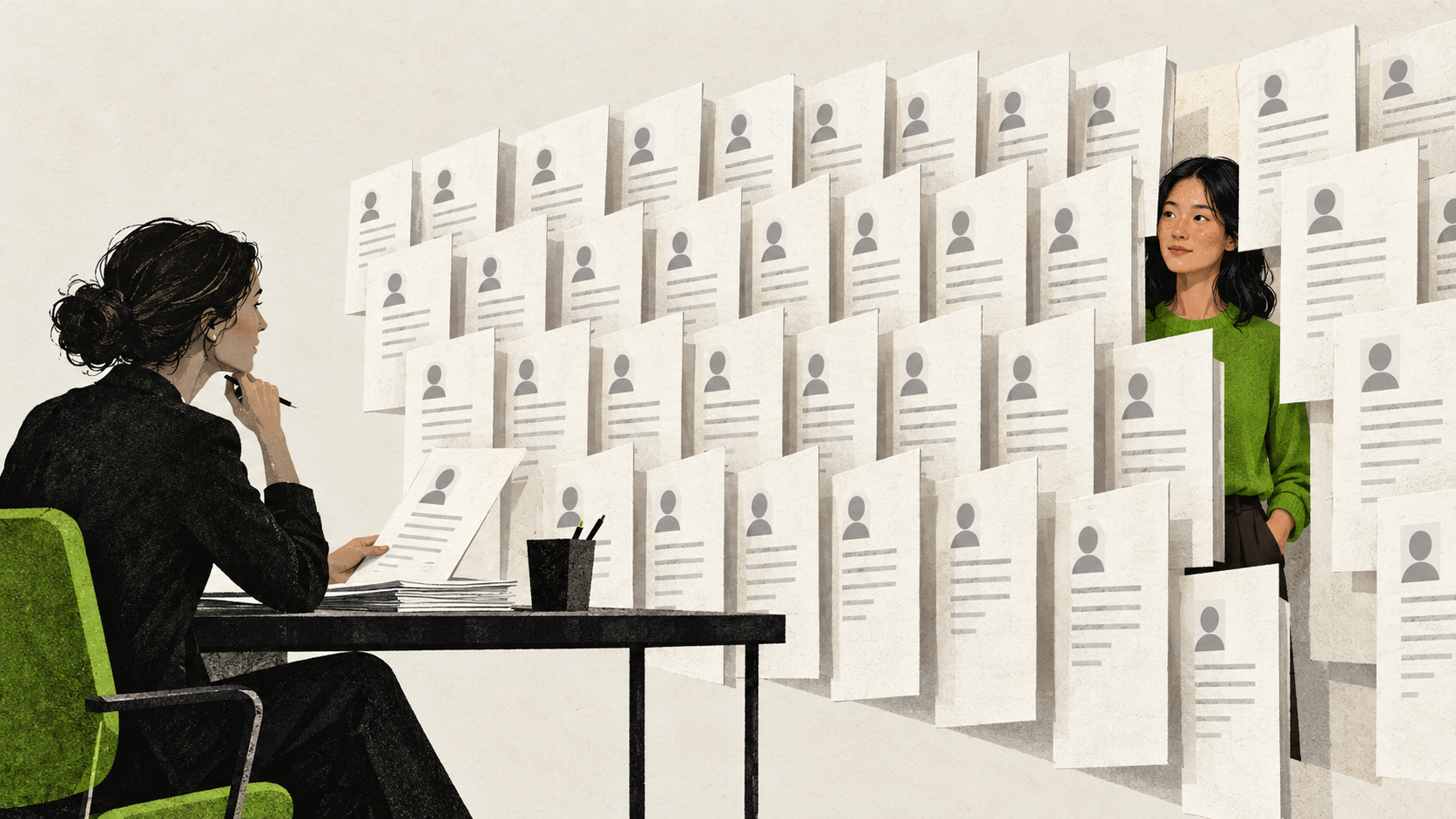
The difficulty comes on the other side of the desk. When applications take less time to produce, candidates can send more of them. Recruiters have more to read, while the documents themselves may reveal less about the people who wrote them.
A better letter does not always mean a better match
At Dansk HR Træfpunkt in Copenhagen in September, HR professionals were asked which recruitment problems they were encountering. The volume of applications came up repeatedly. So did AI generated applications, which attendees said made it harder to get a sense of the person behind the CV and cover letter.
The concern is understandable. If most applicants can produce a clear, persuasive explanation of why they are right for a role, the quality of that explanation becomes less useful as a way to distinguish them.
Research from the Norwegian School of Economics describes this problem. Application letters become less reliable as signals of communication ability, motivation or fit when candidates can use AI to generate the writing.
A study involving researchers at Tilburg University offers a useful example. Recruiters from companies including Philips, PwC, Rabobank and VodafoneZiggo assessed cover letters written with and without access to generative AI. AI improved the average quality of the letters, particularly their more generic sections. Those improvements did not translate into more interview invitations.
That distinction matters. A candidate can submit a better written application without giving the recruiter a better reason to meet them.
What do we still learn from a cover letter?
Employers have traditionally used cover letters to assess several things at once: motivation, communication skills, attention to detail and an understanding of the role. AI makes some of those judgements harder.
An assistant can explain why a company is appealing, echo the language of its job advertisement and turn a few rough notes into confident prose. The resulting letter may accurately reflect the candidate’s views. But the recruiter cannot easily tell how much of the reasoning, research or expression came from the applicant.
This does not make using AI dishonest. Getting help with an application is hardly new. What has changed is how readily that help is available, and how much of the task it can handle.
Official Danish guidance still asks candidates to explain their motivation, respond to the requirements in the advertisement and give employers a fuller picture of the person behind the qualifications. Those remain sensible goals. Whether a cover letter still delivers them is a question employers need to ask.
When both sides automate
More applications also give employers a reason to automate. Tools that summarise, match or screen candidates can help recruiters manage their workload. The NHH research suggests that AI can make early screening more systematic, while emphasising the need for human accountability.
But there is a practical problem here. Candidates use AI to tailor applications. Employers use technology to evaluate them. Candidates adjust their applications to suit the screening process, and employers introduce more assessments to find out what the applications no longer tell them.
It is easy to imagine a process that becomes more elaborate without becoming more informative. By the time a candidate and recruiter speak, both may already have spent considerable effort navigating each other’s tools.
Nordic employers are making different choices about this. Fortum says it does not use AI to screen applications. Its hiring managers and recruiters review them, with interviews and, for many roles, digital assessments forming part of the process.
There is no single answer in that example. It does show why “Are we using AI in recruitment?” is too broad a question. Summarising a CV and deciding who gets an interview are different tasks, with different consequences.
Finding evidence that matters
If employers learn less from an application, they need to think more carefully about what they ask candidates to demonstrate next.
A relevant work sample can show how someone approaches a task. A structured interview can explore a decision they made, the alternatives they considered and what happened afterwards. A well designed assessment or job simulation can test skills the role actually requires.
None of these methods is automatically useful. A work sample that takes hours may deter good candidates. An assessment that bears little resemblance to the job adds another hurdle without telling the employer much. The point is to choose evidence that helps answer a specific hiring question, rather than compensate for uncertainty by adding more steps.
This could give skills based hiring a stronger practical case. As written applications become more alike, evidence of what someone can do may become more valuable.
There is also a risk of moving in the opposite direction. When documents feel less trustworthy, a recommendation from someone you know can feel reassuring. Some recruiters are already placing more weight on personal connections as AI use grows, according to NHH’s reporting. That may help an employer make sense of the applicant pool, but it can leave capable people without established networks at a disadvantage.
The question for Nordic HR teams
The tension is particularly relevant in Denmark, where application guidance places considerable emphasis on motivation and the person behind the CV. Employers still want to understand who they might work with. A polished document may simply be a less dependable way to find out.
For HR teams, a useful starting point is to look at each stage of recruitment and ask what it is supposed to reveal. If the cover letter is there to assess motivation, how confidently can you infer that from its wording? If writing ability matters to the job, would a relevant exercise tell you more? If it does not matter, why should the quality of the letter carry much weight?
AI has made an existing weakness harder to ignore: we have often treated the effort involved in applying as evidence of suitability. Sometimes that effort revealed something useful. Sometimes it mostly showed who had the time, confidence or help to produce a convincing application.
Making applications easier can be a good thing. Employers now need to adapt their processes to reflect it. The aim should be to learn enough about a candidate to make a fair decision about meeting them, without making everyone work harder to recover information that a cover letter may no longer provide.